
In-School 1:1 Behaviour Support in Singapore
- Home
- Our Services
Direct intervention in the environment where the skills need to work
In-School 1:1 Behaviour Support brings individualised intervention into the school day.
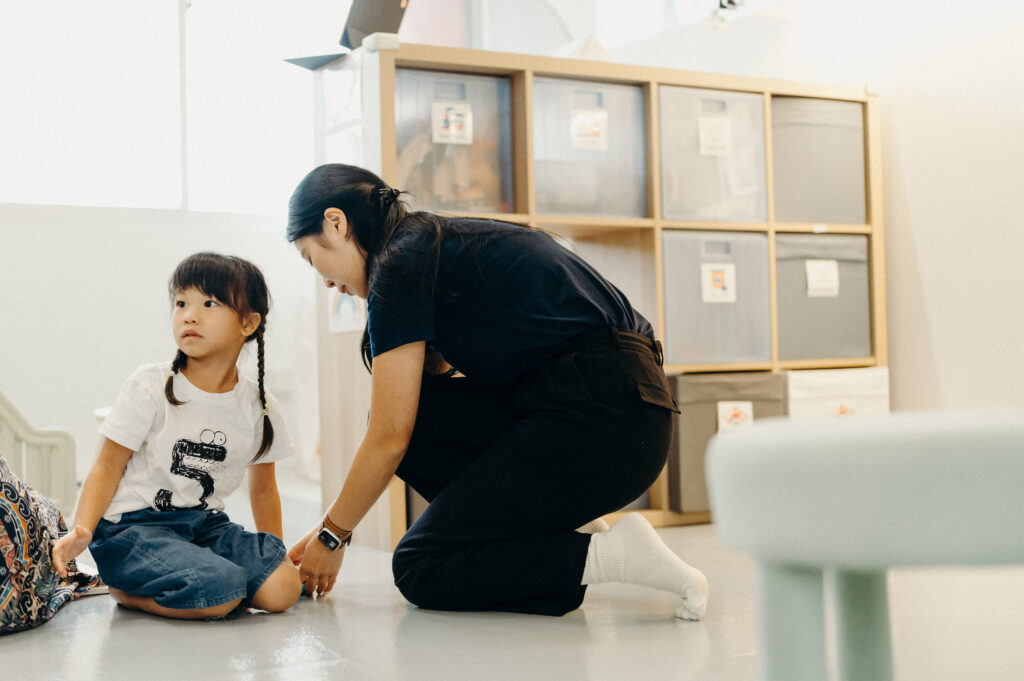
Our trained therapists work directly with students on specific behavioural, learning-participation, social, communication or independence goals through push-in support within natural school routines, focused pull-out teaching, or a combination of both.
This is more than simply providing an extra pair of hands. The therapist is there to teach, create opportunities for independent responding, collect meaningful data and help the student use skills successfully within the real demands of school.
When might direct support in school be useful?
In-school support is most useful when there is a clear goal that needs to be taught, practised or generalised during the school day.
For some students, the difficulty happens mainly at school. For others, a skill may be present 1:1 but break down around peers, group instructions, transitions, distractions or reduced adult attention.
If it is not yet clear why school is difficult, we may recommend a School Observation & Consultation before starting ongoing support.
What can In-School 1:1 Behaviour Support help with?
Goals are chosen around what is getting in the way of participation and independence in the student’s actual school environment. They should be specific enough that the therapist, school and family can recognise meaningful progress.
The target is not simply “behave well at school”. We define observable skills and outcomes that can actually be taught and tracked.
How is intervention delivered during the school day?
The delivery model follows the goal and the school’s routines. In practice, intervention is usually push-in, pull-out, or a combination of both.
Many programmes use both. A skill may first be taught more intensively in a pull-out setting, then practised through push-in support under real classroom demands.
What does intervention look like in practice?
The therapist is not simply waiting for something to go wrong. They use naturally occurring moments in the school day to teach the target skill and test whether the student can use it with less support.
Clinically led, tracked and designed to fade
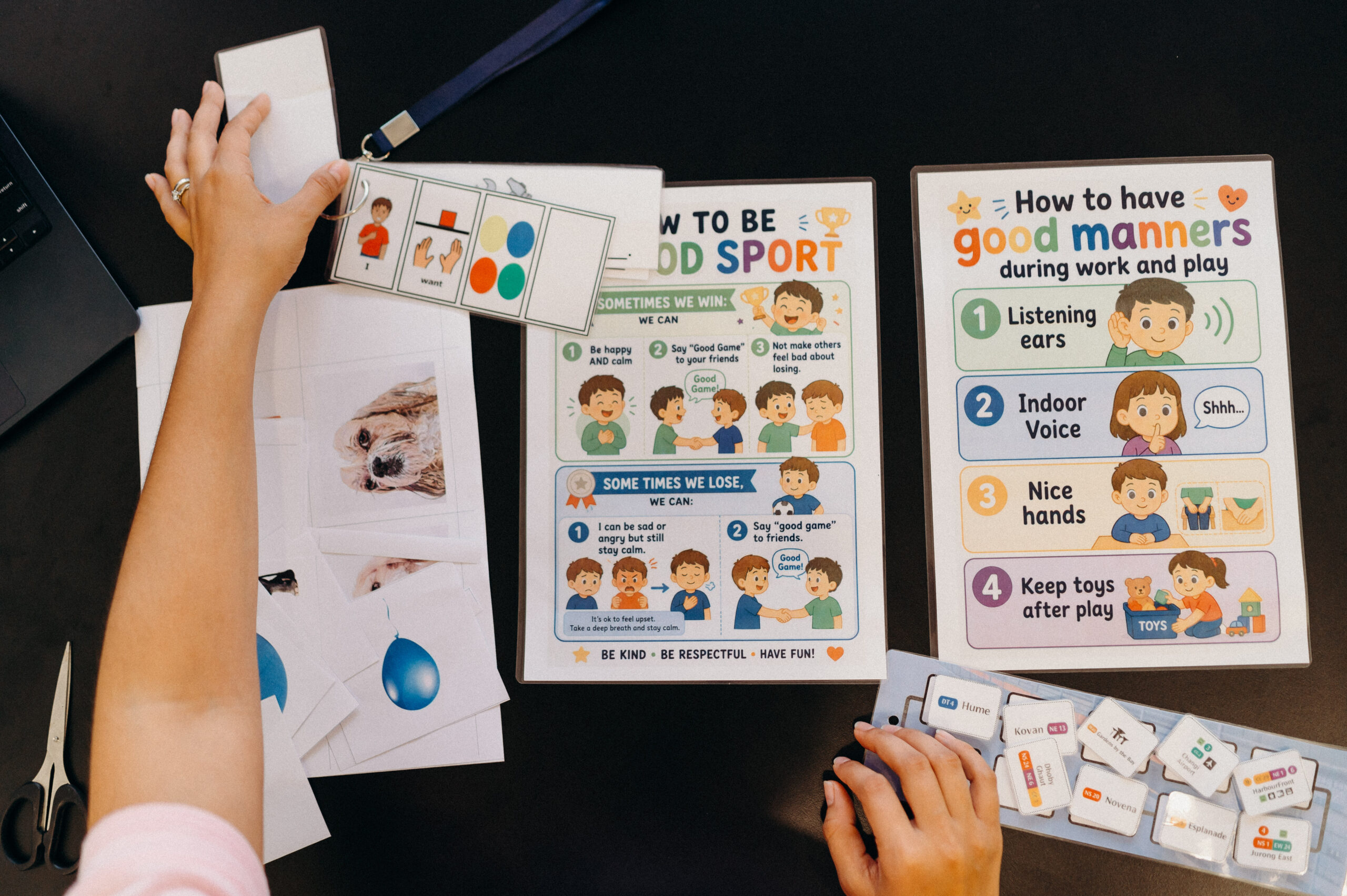
Tesserae provides the therapist and leads the intervention around them. The programme is built around clear goals, teaching strategies and decisions about what should change next.
Our therapists collect data and document sessions. The clinical team reviews progress against the student’s targets and adjusts the programme when needed.
Is the skill actually changing?
How much help was required?
Can the student succeed with the therapist further away?
Does the skill work with teachers, peers and normal school routines?
Working with the school and broader support team
School-based intervention works best when the adults around the student are working towards the same outcomes. We aim to fit support into the school’s existing routines rather than create a separate therapy system inside the classroom.
All in-school services require the school’s approval. The exact model depends on school policies, timetable, the student’s goals and what the school permits external professionals to do.
What happens if we explore In-School 1:1 Behaviour Support with Tesserae?
We do not begin by assuming a student needs a shadow. We first clarify what is happening at school and what direct intervention would be expected to change.
Discovery Call
Tell us what is happening at school, what support is already in place and what you would like help with.
Understand the School Context
Where needed, we may recommend a School Observation & Consultation before proposing ongoing support.
Individualised In-School Programme
If direct support is appropriate and the school approves access, we define the goals, intervention format and starting level of therapist support.
Review, Coordinate & Fade
We review progress, coordinate with the relevant team and reduce prompts, proximity or supported time as independence grows.
What do families and schools usually ask?
Is this the same as school shadowing?
School shadowing is one way of describing closer 1:1 support within the school day. At Tesserae, it is not a standalone goal. Where that level of support is needed, it sits within an individualised intervention programme with defined targets, active teaching, progress tracking and a plan to reduce support over time.
Will the therapist replace the teacher?
No. The teacher remains responsible for the classroom and curriculum. Our therapist works on the student’s specific behavioural, social, participation, communication or independence goals within the school environment.
Will the student become dependent on 1:1 support?
Independence is the goal from the outset. We do not want a student to become dependent on 1:1 support. We track prompting, therapist proximity and independent responding, then deliberately reduce support as the student becomes able to participate successfully with less help.
Does the school need to approve the service?
Yes. All in-school services require the school’s approval. The practical model also depends on school policies, timetable, the student’s goals and what the school permits external professionals to do.
On this page
Not sure what kind of school support would help?
Not sure whether direct in-school support is the right next step?
Book a complimentary Discovery Call with our team. We can talk through what is happening at school, whether observation or direct intervention would be more useful, and what the next step could look like.