Our supervisory team brings extensive experience across the US, Canada and Singapore, grounded in high standards of clinical rigour and ethical care.
Board Certified Behaviour Analysts (BCBAs) are globally recognised specialists in behaviour analysis and intervention and remain limited in number in Singapore, with fewer than 20 practising locally. Tesserae is led by a team of three BCBAs, including a BCBA-D (doctoral-level), placing us among a small number of centres with this depth of clinical expertise.
At Tesserae, our BCBAs remain actively involved in direct clinical work, not just supervision. This gives them a close understanding of each child and allows programmes to be shaped around what matters in their everyday lives.
Our focus is not simply on what a child can do in the therapy room. We work towards helping skills carry over into the environments where they matter most, particularly school, home and the wider community, while reducing support as greater independence develops
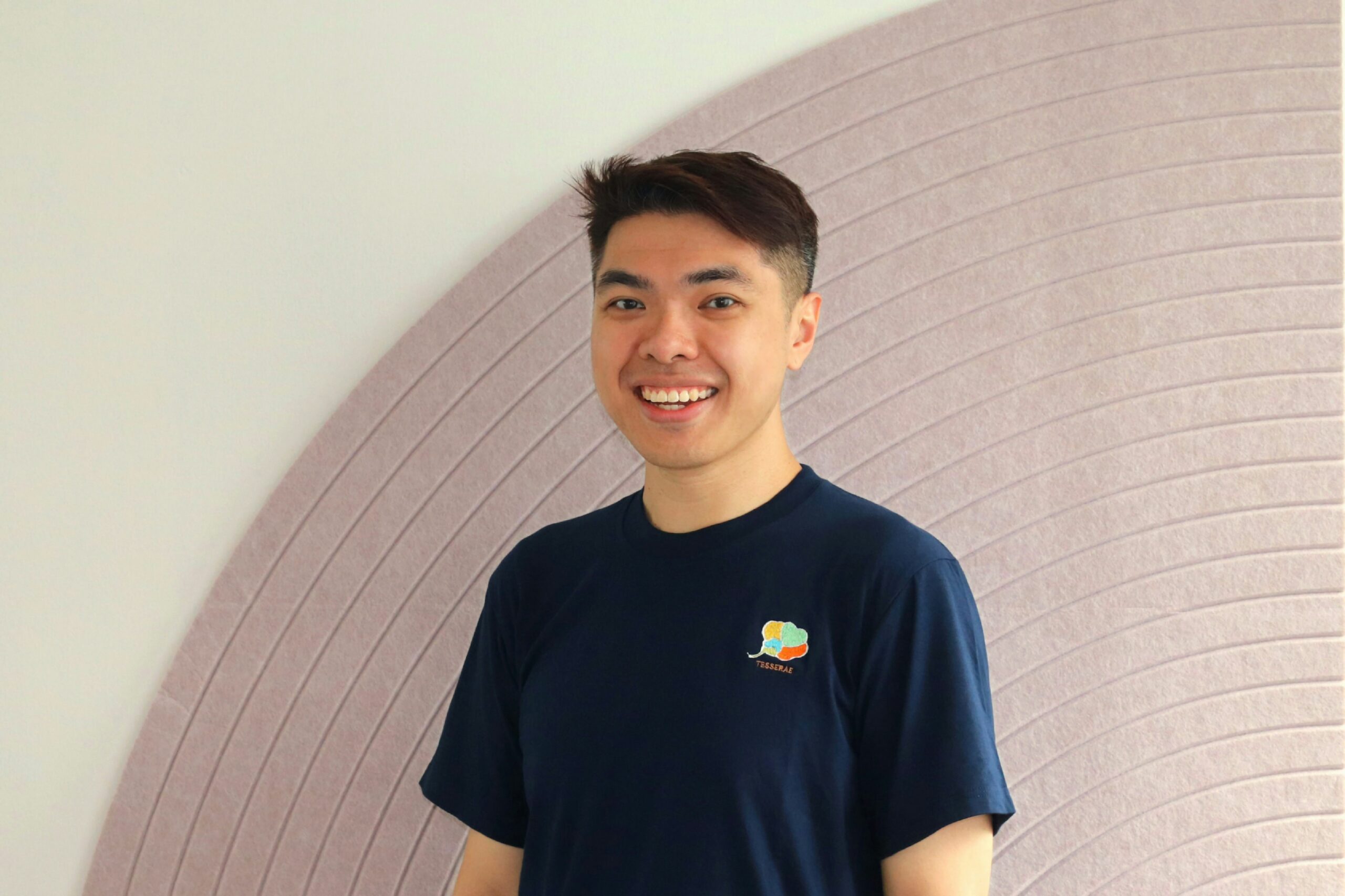
Dr. Dominic Leong is Southeast Asia’s only practising Doctoral-level Board Certified Behavior Analyst (BCBA-D). He is also the Founder and President of the Association for Behaviour Analysis (Singapore), where he works with clinical professionals to advance standards and quality of care in the field.
With over a decade of experience, Dr. Dominic has supported neurotypical and neurodiverse individuals across ages and settings, including homes, schools and community environments. His research explores innovative, interdisciplinary applications of Applied Behaviour Analysis (ABA), including pioneering arts-integrated interventions in partnership with institutions such as Sing’theatre. These programmes have brought dance and drama-based interventions to more than 50 individuals with special needs.
Dr. Dominic is a strong advocate for holistic, trans-disciplinary and context-driven care. Drawing on his background in counselling and behaviour analysis, he focuses on helping individuals build skills that are meaningful beyond the therapy setting and can be applied in everyday life. He works closely with families, schools and other professionals to support generalisation across environments, with the longer-term goal of building independence and reducing reliance on formal support where appropriate.
Board Certified Behaviour Analyst – Doctoral (BCBA-D)
Professor at Endicott College, a global leader in ABA research & education
PhD in Applied Behaviour Analysis – Endicott College
Master of Education (Autism & ABA) – Endicott College
Master of Guidance & Counselling (Counselling & Psychology) – James Cook University
Certified in Autism Diagnostic Observation Schedule (ADOS-2)
Trained in the Nuffield Dyspraxia Programme (NDP3)
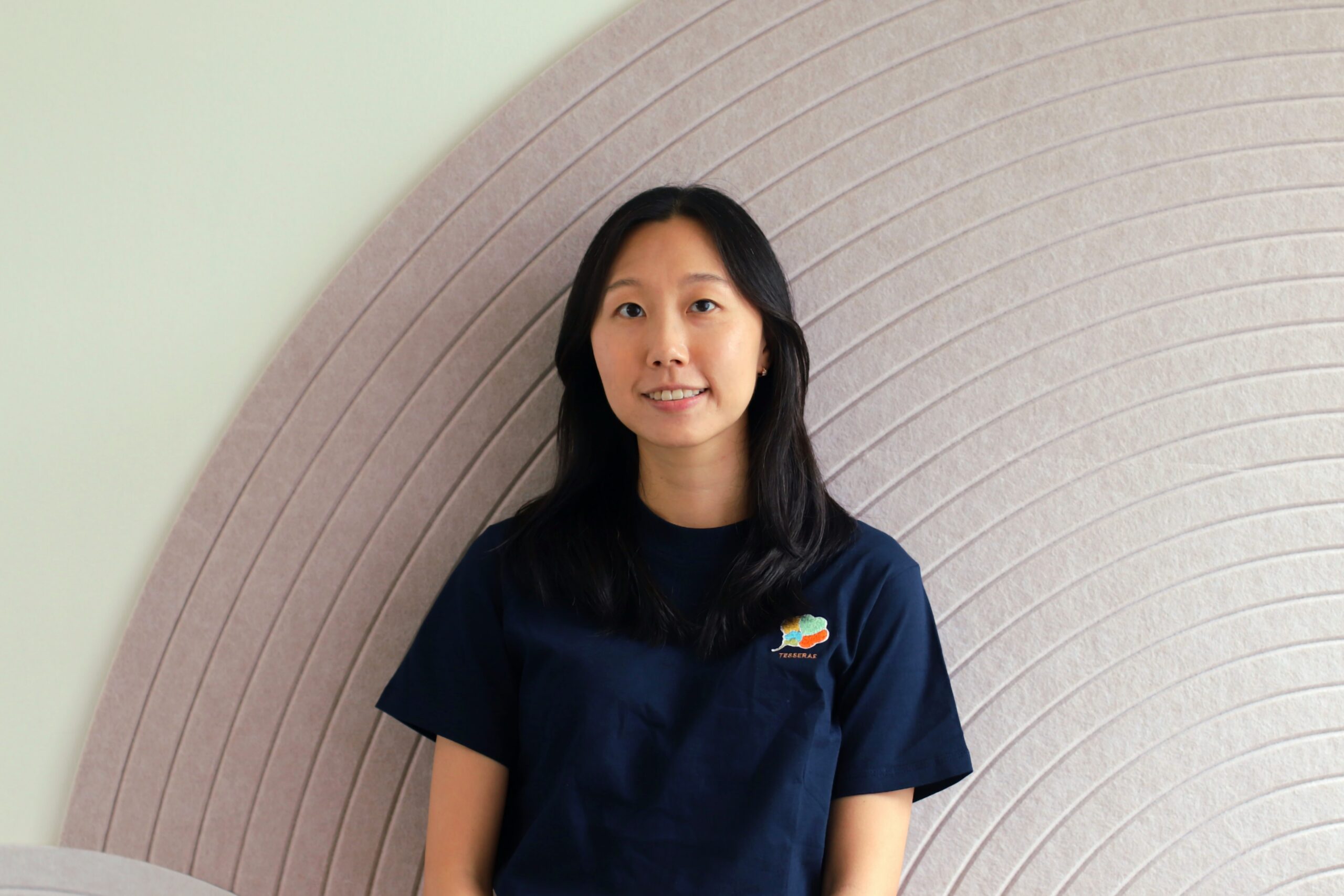
Having spent the first half of her career in Canada and lived across Singapore, Korea, Japan and Indonesia, Stephanie brings extensive experience working with families across both Eastern and Western cultures. She places strong emphasis on understanding the environments around each individual, working closely with families, teachers, SLTs, OTs and other professionals to develop support that is practical, collaborative and responsive to each person’s strengths and needs.
Stephanie has supervised and trained more than 50 therapists over the course of her career. Her clinical and research interests include sleeping and feeding challenges, treatment fidelity, and the design of interventions that are appropriate to the individual’s everyday context and environment.
At Tesserae, Stephanie’s work reflects a strong focus on generalisation beyond the therapy setting. She works with families, schools and therapy teams to help ensure that skills can be carried across people and environments, with the broader goal of supporting greater participation and independence in everyday life.
Board Certified Behaviour Analyst (BCBA)
Master of Special Education (Autism & Developmental Disabilities) – University of British Columbia
Post Baccalaureate Diploma in Applied Behaviour Analysis – Capilano University, President’s Medal Award recipient
Bachelor of Arts, Psychology – University of British Columbia, President’s Entrance Scholar
Formally trained in leading assessment tools: ABLLS-R, VB-MAPP, CTOPP-2, Vineland-3, ESDM Checklist
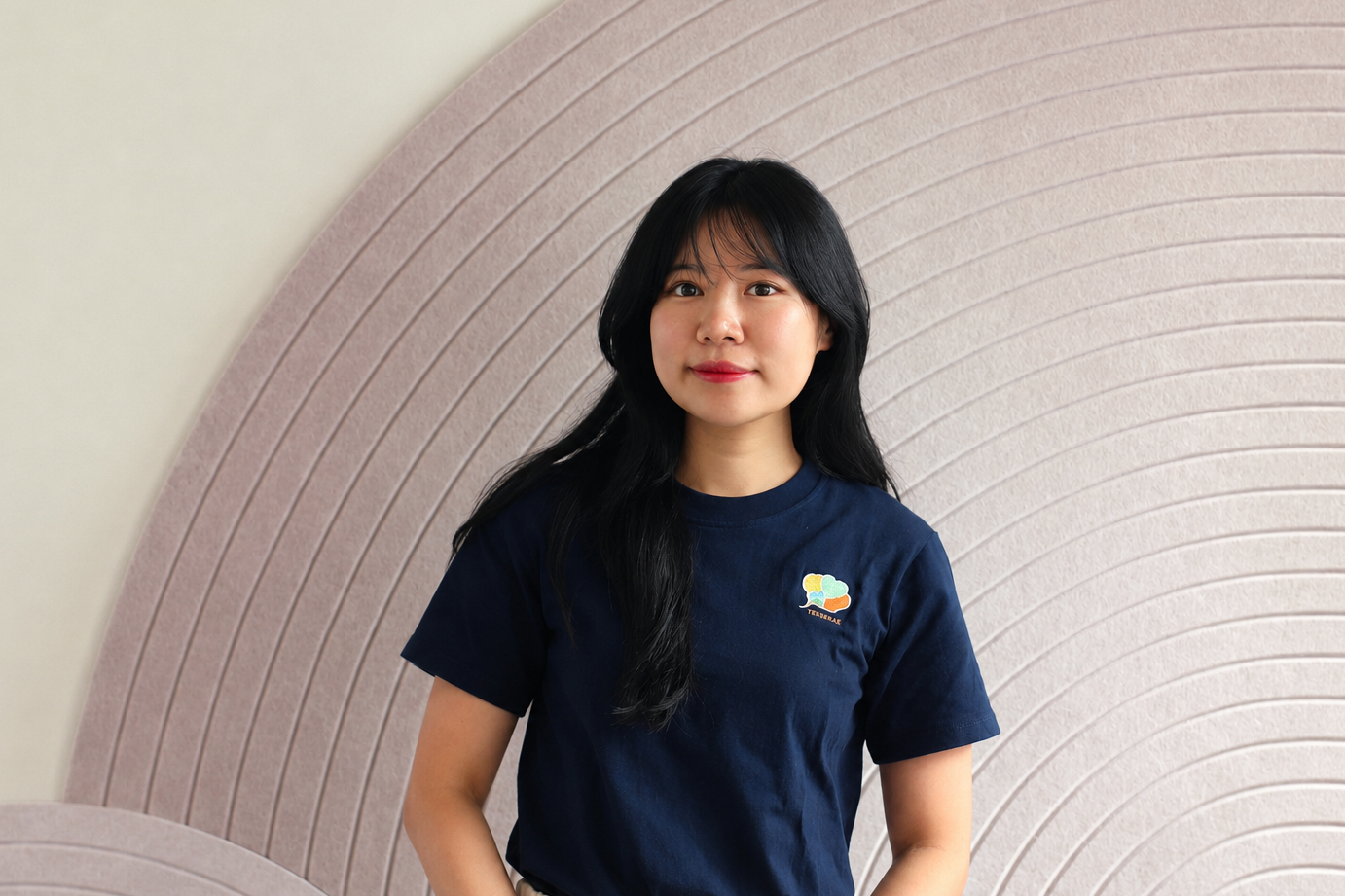
Vanessa Auriel is a Board Certified Behavior Analyst (BCBA) with a strong commitment to supporting individuals across different age groups. She has worked with both children and adults across homes, schools, intervention centres, day programmes and community environments in the United States and Singapore.
A significant part of Vanessa’s work has involved supporting children in school settings. She works closely with families, educators and other professionals to develop practical strategies that can be carried across environments and embedded into everyday routines.
Vanessa is a strong advocate for neurodiversity-affirming practice, designing programmes that meet each individual where they are while supporting meaningful, long-term progress. Her work focuses on helping individuals participate more successfully and independently in the environments that matter most to them.
Board Certified Behaviour Analyst
Master of Science (Applied Behavior Analysis) – University of Southern California, Applied Behavior Analysis Scholarship
Bachelor of Arts, Psychology – University of California, Los Angeles, Summa Cum Laude
Formally trained in leading assessment tools: ABLLS-R, VB-MAPP, Vineland-3, ESDM Checklist
At Tesserae, our clinical team is led by Dr Dominic Leong, Southeast Asia’s only practising BCBA-D, alongside two other Board Certified Behavior Analysts (BCBAs). This gives families access to advanced expertise in behaviour analysis and clinical supervision.
Parents can verify a practitioner’s certification on the Behaviour Analyst Certification Board (BACB) registry, which shows whether their credentials are current and active.
Here’s what you need to know about the different qualifications within behaviour analysis, so you can make an informed choice about your child’s support.
A Board Certified Behavior Analyst (BCBA) is a professional trained and certified to assess behaviour, design individualised intervention programmes, supervise implementation, and adjust support based on a person’s progress and needs.
A BCBA is trained to independently assess needs, design and supervise behaviour support programmes, and may also work directly with children to assess progress and model strategies.
RBTs and other ABA therapists typically focus on delivering sessions and implementing programmes under the guidance and supervision of a behaviour analyst.
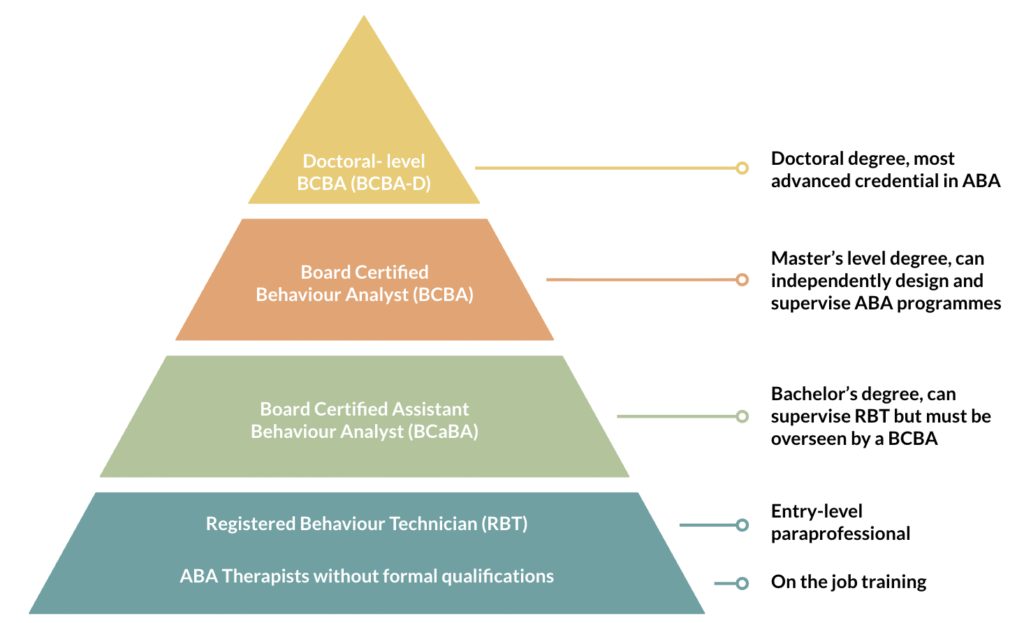
For a child receiving behaviour support, the BCBA is responsible for overseeing the overall programme, from assessment and planning through to ongoing review. This typically includes:
Ongoing oversight by a BCBA helps ensure that support remains ethical, evidence-based, responsive to progress, and tailored to the individual’s needs.
To become a BCBA, an individual must meet graduate-level education requirements set by the Behaviour Analyst Certification Board (BACB), alongside specific training in behaviour analysis.
Depending on the certification pathway, this includes completing recognised behaviour-analytic coursework covering areas such as behavioural principles, assessment, intervention and ethical practice.
Together, these requirements provide the foundation needed to practise independently as a behaviour analyst.
Beyond academic training, aspiring BCBAs must complete substantial supervised fieldwork in applied behaviour analysis.
Current requirements include either 2,000 hours of Supervised Fieldwork or 1,500 hours of Concentrated Supervised Fieldwork, completed under qualified supervision. This practical experience helps develop competence in assessment, programme design, implementation and professional collaboration
After meeting the relevant education and fieldwork requirements, candidates must pass the BCBA certification examination.
Once certified, BCBAs must continue their professional development and meet ongoing BACB requirements to maintain their credentials.
BCBA certification is not a one-time qualification. BCBAs currently recertify every two years and must complete continuing education and meet ongoing ethical requirements to maintain their certification.
Parents can check whether a BCBA’s certification is current and active through the official BACB registry.
At Tesserae, we openly share our clinicians’ qualifications and place strong emphasis on ongoing professional development, ethical practice and accountability.
A BCBA-D is a Board Certified Behavior Analyst who has completed qualifying doctoral or postdoctoral training in behaviour analysis. The “D” reflects this additional doctoral-level training, which can bring deeper expertise in research, advanced clinical thinking, teaching and leadership.
Both BCBAs and BCBA-Ds are qualified to practise independently as behaviour analysts. What the BCBA-D designation adds is greater depth of academic and research training, which can be particularly valuable when approaching complex cases, evaluating emerging evidence, and supporting the development of the wider clinical team.
Both BCBAs and BCBA-Ds are qualified to independently assess, design and supervise behaviour support programmes. The key difference lies in the additional doctoral-level academic and research training represented by the BCBA-D designation.
| Feature | BCBA | BCBA-D |
|---|---|---|
|
Qualification |
Graduate-level training + BCBA certification |
Doctoral/postdoctoral training + BCBA certification |
|
Clinical Role |
Assessment, programme design, supervision and direct clinical work |
Same independent clinical scope, with additional doctoral-level expertise |
|
Additional Depth |
Advanced training in behaviour analysis |
Greater depth in research, teaching, consultation and clinical leadership |
At Tesserae, having Dr Dominic Leong, Southeast Asia’s only practising BCBA-D, brings an additional layer of research expertise, clinical leadership and consultation to our wider team.
Our three BCBAs are each qualified to independently assess, design and oversee behaviour support programmes. Families are matched with clinicians based on the individual’s needs, context and goals, rather than simply by credential level.
Where a case would benefit from additional consultation or a different clinical perspective, our BCBAs can draw on the expertise of the wider team, including Dr Dominic. This means his doctoral-level expertise strengthens not only the individuals he works with directly, but also the clinical thinking, supervision and quality of care across Tesserae.
Families therefore benefit from the combined expertise of our BCBA team, rather than relying on any one clinician.
A BCBA looks beyond a diagnosis or standard programme to understand the individual’s strengths, needs, environment and goals. Support can then be designed around what is actually meaningful for the child and family.
BCBAs are trained to assess progress, interpret behavioural data and adjust programmes when something is not working. This ensures that support continues to evolve as the child develops and their needs change.
Effective behaviour support should extend beyond the therapy room. BCBAs can work with families, educators and other professionals to help skills generalise across home, school and community settings, with the longer-term goal of greater participation and independence.
When speaking with a potential BCBA, it is worth looking beyond qualifications alone. A few useful questions include:
Not all providers approach behaviour support in the same way. Be cautious of: