Social skills are the everyday abilities that help children and teenagers connect, communicate, play, work through disagreements and build relationships with other people.
Our Social Skills Groups are clinically designed and delivered by trained behaviour therapists. Children practise through real interaction with carefully matched peers, while each child works on their own individual social goals.
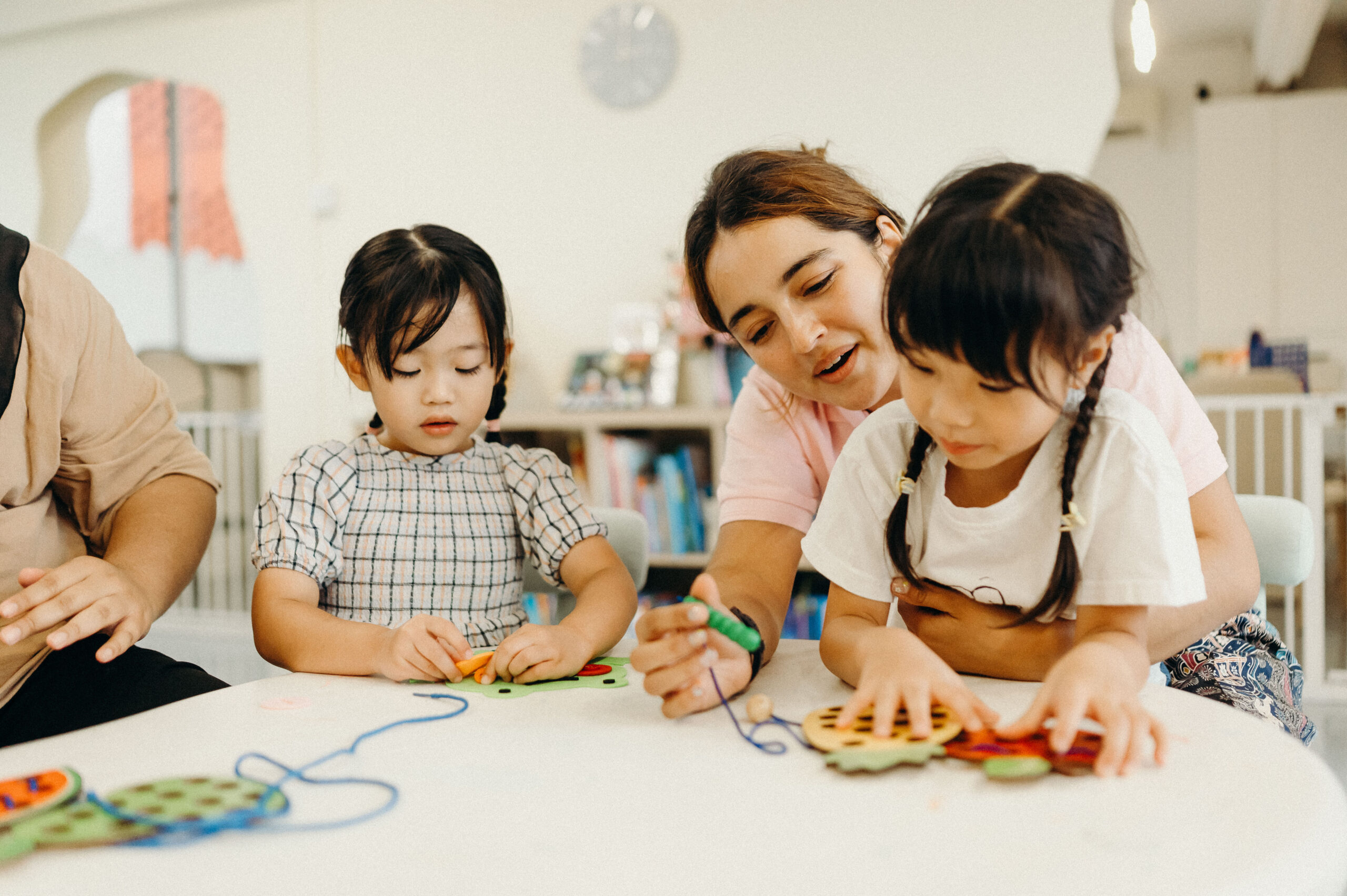
Rather than only talking about what to do, children get repeated opportunities to join, respond, negotiate, compromise, repair and try again. Our therapists shape the learning around those interactions, adjust support to the child and step back as skills become more independent.
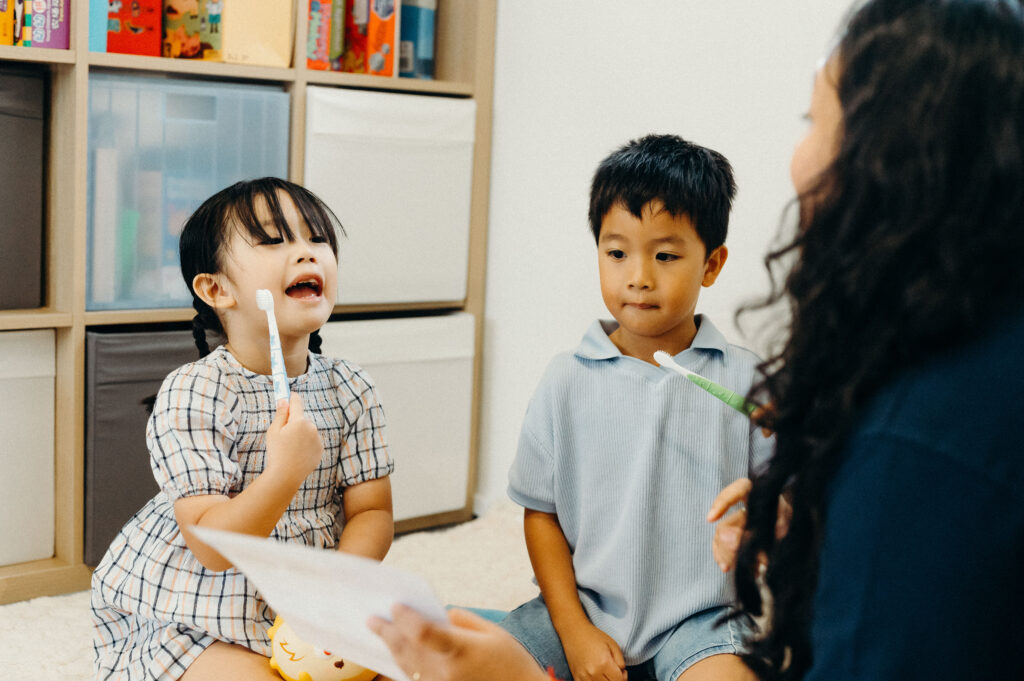
There is no single way a social difficulty looks. Some children rarely approach peers. Others are highly social but find it difficult to keep an interaction reciprocal, cope when someone disagrees or work through the small problems that come with friendship.
The social world changes quickly as children grow. A useful goal for a 3-year-old looks very different from a useful goal for a 10-year-old or teenager. Our age bands help us create developmentally relevant peer opportunities, but placement still depends on the child’s current skills, goals and group fit.
Age is only one part of matching. Two children who are both 8 may have very different communication styles, social goals and support needs. We form groups around compatibility, not birthdays alone.
Social skills training can look very different depending on the child’s age, current skills and relationships. We select goals that are relevant to the situations the child is actually trying to navigate.
Social skills programmes can look similar from the outside: games, conversations, role-play and group activities.
The difference is in how those interactions are used. At Tesserae, every facilitator is a trained behaviour therapist, each child has individual goals, and peers are part of the intervention itself rather than simply other children completing the same activity.
| Comparison area | A curriculum-led social skills programme may focus on | Tesserae’s behaviour-therapist-led model |
|---|---|---|
| Who delivers the programme | The programme may be facilitated around a shared set of activities or social themes. | Every facilitator is a trained behaviour therapist who can teach, prompt, observe and adjust support within the interaction. |
| How goals are set | Children may work broadly on the same social topic or skill area. | Each child has individual social goals based on their own baseline, needs and the interactions that matter to them. |
| How skills are practised | Teaching may rely more heavily on discussion, role-play or practising a pre-taught response. | Children practise through genuine peer interaction, where another person can disagree, change the plan, misunderstand or respond unexpectedly. |
| How support is provided | The same activity structure or adult support may be used across the group. | Prompts, reinforcement, opportunities and therapist involvement are adjusted child by child within the same interaction. |
| How progress is understood | Progress may be reflected through participation in the activity or familiarity with a social rule. | Progress is reviewed against observable individual goals and whether the child can use the skill more flexibly and independently. |
| What progression looks like | The child may become more familiar with the activities or expected responses. | We deliberately reduce adult mediation and increase natural peer interaction as the child becomes more capable. |
Good group matching matters because peers are part of the learning environment. A useful group needs enough overlap for children to practise meaningful skills with one another, while still allowing each child to work on their own targets.
We do not force a group match simply because a place is available. If the fit is not right, waiting for a more appropriate group can be more useful than placing a child into the wrong social environment.
Not every social skill needs to be taught in a group from the start. Some children benefit from 1:1 Behaviour Support first to strengthen foundational skills such as functional communication, responding to others, basic turn-taking, tolerating shared activities or managing frustration.
For other children, 1:1 support and group practice can run in parallel. A skill may be introduced or strengthened individually, then practised with peers where the interaction is naturally less predictable.
1:1 support is not a prerequisite for joining a group. We use it when more concentrated teaching would help the child get more value from peer-based practice.
Speech and language therapists specialise in speech, language and communication. Depending on the child, they may work on areas such as language comprehension, expressive language, speech production or AAC.
Our Social Skills Groups use behavioural teaching and peer interaction to focus on how social and communication skills are used in real situations, such as joining peers, responding to feedback, maintaining an interaction, negotiating, repairing misunderstandings or handling conflict.
Because a group depends on the right peer match, we do not place a child based on age or availability alone. We first understand the child’s current skills and goals, then consider whether a group can provide the right level of challenge and support.
Tell us what you are noticing in play, conversations, friendships or other social situations, and what you would like your child to be able to do more independently.
We meet at our centre to understand your child’s current social, communication and learning profile. Our 2-Hour Initial Consultation & Assessment includes caregiver input, direct observation and structured probes, followed by a debrief on what we observed and the most useful next steps.
We look at age band, communication, current social skills, behaviour and regulation needs, goals, and the peers currently available. A child may be ready to join a group directly, may benefit from some 1:1 teaching alongside or before group practice, or may need to wait for a more suitable peer match.
If there is a suitable match, each child works on individual social goals while taking part in shared activities and genuine peer interactions. We track progress, adjust the level of support and deliberately step back as the child becomes more able to navigate the interaction independently.
We work across age bands including 2–3, 4–6, 7–8, 9–11 and teenagers. These are useful starting points for matching, not rigid developmental categories. The actual fit depends on communication, current social skills, goals, support needs and the peers available in the group.
No. Children may have autism, ADHD, other developmental needs or no diagnosis. Group suitability is based on the child’s goals and whether the group can provide useful social learning opportunities.
Shyness alone does not necessarily mean a child needs social skills training. We look at whether the child wants more social connection and whether a specific skill gap is meaningfully limiting their ability to participate or build relationships.
We do not force a match just to fill a place. Depending on the child’s needs, we may recommend waiting for a more suitable peer group, continuing relevant 1:1 work in the meantime or considering another way to practise the target skills.
Wondering which age group would fit?
Book a complimentary Discovery Call. We can talk through your child’s age, current social skills and goals, and whether we currently have a group with the right peer match.