1:1 Behaviour Support in Singapore
- Home
- Our Services
Support that starts with understanding
Individualised, evidence-based 1:1 support for children, teens and adults to build practical skills, manage everyday challenges, and participate more independently at home, in education, at work and in the community.
Every behaviour happens for a reason. A person may be struggling to communicate what they need, a task may feel too difficult, a transition may be overwhelming, or they may not yet have the skills to manage a particular situation.
At Tesserae, we look beyond the behaviour itself. We work to understand why something is happening, what skill or support may be missing, and what we can teach or change to make everyday life easier.
When everyday situations keep becoming difficult
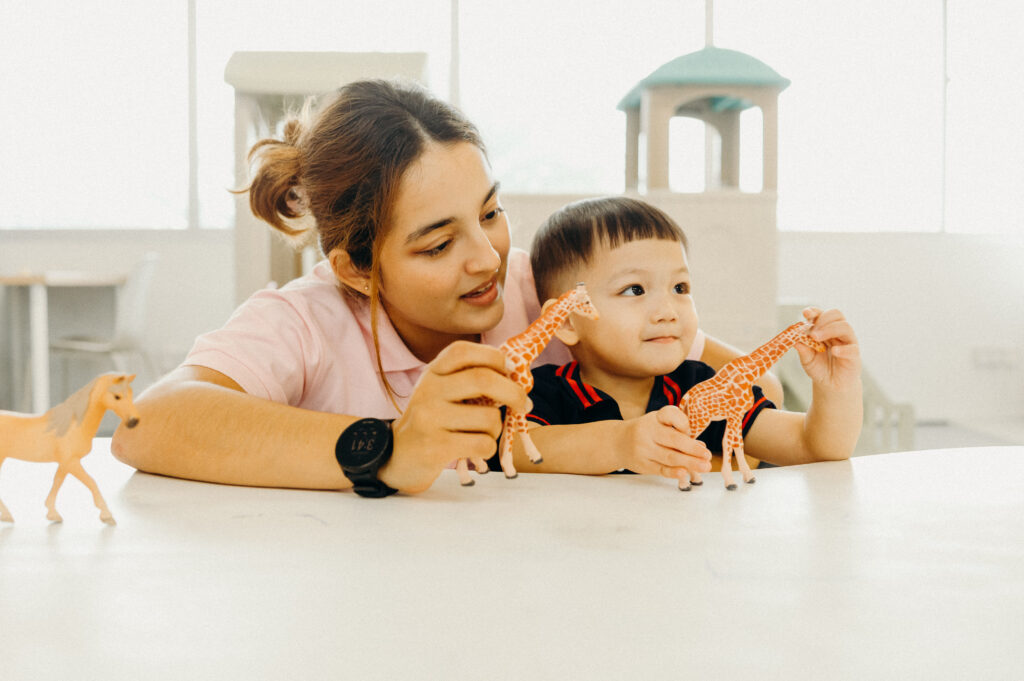
People and families often come to us when a behaviour or everyday difficulty is beginning to affect learning, relationships, independence, safety, work or family life.
The concern does not have to be severe before it is worth understanding. Often, the question is simply: why does this keep happening, and what would help?
Behaviour Support starts with understanding, not simply stopping behaviour
Behaviour Support is a structured way of understanding what is contributing to a behaviour and what skills, supports or environmental changes may help.
The same outward behaviour can happen for very different reasons. Someone who pushes work away or leaves a task may find it too difficult, may not know how to ask for help, or may have learnt that leaving is the most effective way to escape the demand. Those situations should not be treated in the same way.
What can Behaviour Support help with?
Behaviour Support can cover several areas of everyday functioning. We use the person’s main area of need to decide where support should focus, and link those goals to the broader outcome areas used across Tesserae.
Where can Behaviour Support happen?
Behaviour Support does not have to happen in one setting. The right environment depends on what we are working on, where the difficulty occurs, and where the skill ultimately needs to work.
Practice should look like real life, not only therapy
1:1 Behaviour Support is delivered at our centre in Joo Chiat or, where appropriate, in another environment.
What happens in a session depends on the goal. We may use structured teaching where helpful, but we also create opportunities through conversation, routines, learning activities, games and everyday situations.
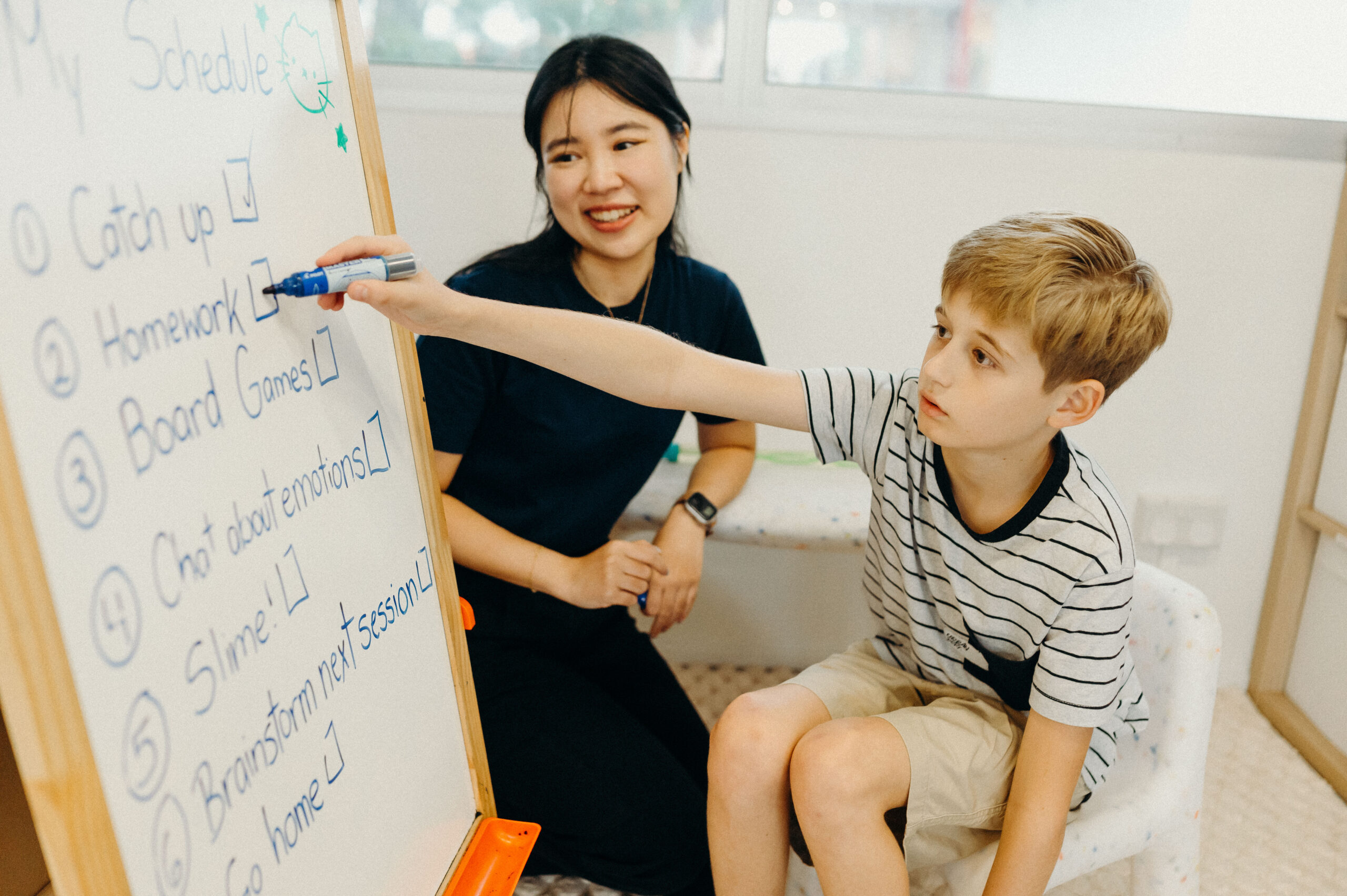
We want people to learn the skill, know when to use it, and eventually use it with less support.
Behaviour Support is based on need, not a diagnosis
1:1 Behaviour Support is based on the areas of everyday life where support is needed, rather than on a diagnosis alone. We work with children, teens and adults with autism, ADHD, developmental or learning differences, and social, emotional or behavioural difficulties.
A formal diagnosis is not required. If there is a clear concern affecting participation, regulation, learning, relationships or independence, we can explore whether Behaviour Support is appropriate.
Where does ABA fit into Behaviour Support?
Tesserae’s Behaviour Support is grounded in behavioural science and Applied Behaviour Analysis (ABA). ABA helps us understand how behaviour and learning are affected by context, teach skills systematically, and measure whether change is working.
Behaviour Support describes the service and outcomes. ABA describes much of the clinical framework we use.
Clinically led, data-informed, and designed to become less necessary
The same outward behaviour can happen for very different reasons. Effective support needs clinical judgement, clear goals and enough measurement to know whether the plan is actually working.
Our clinical team includes three Board Certified Behaviour Analysts, including a doctoral-level BCBA-D, who oversee assessment, programme design and review.
Specific, targeted goals based on current skills and everyday priorities.
Data is collected throughout intervention to monitor progress and guide clinical decisions.
Every session is documented to maintain continuity and capture relevant observations and progress.
Progress is reviewed against treatment goals so the person and, where relevant, families can see what has changed and what should happen next.
Where appropriate, we also collaborate with parents, schools and other professionals involved in the person’s care.
What happens if we explore Behaviour Support with Tesserae?
You do not need to know exactly what type of support is needed before contacting us. We use the early steps to understand the concern and decide whether 1:1 Behaviour Support is likely to be useful.
Discovery Call
Tell us what you are seeing and what you would like to change. We will help you decide whether an Initial Consultation & Assessment would be useful.
2-Hour Initial Consultation & Assessment
We spend direct time with the person receiving support and, where relevant, speak with family members or caregivers to understand strengths, current difficulties and everyday priorities. Afterwards, we discuss our observations and recommended next steps.
Individualised Support
If ongoing support is appropriate, we build around a small number of meaningful goals and choose the setting and frequency that best fit the person’s needs.
Review, Fade & Transition
We review progress, help skills work across people and environments, and reduce therapist involvement as independence grows.
What do families usually ask?
Is a diagnosis required?
No. Behaviour Support is based on the person’s individual needs rather than requiring a particular diagnosis. We support children, teens and adults with diagnosed developmental or learning differences, as well as people with a specific behavioural, regulation, learning or independence concern without a formal diagnosis.
Is Behaviour Support only for severe behaviour?
No. Some people may display aggressive or unsafe behaviour. Others need support with everyday difficulties such as transitions, routines, flexibility, task completion, frustration, relationships or independence. What matters is whether the difficulty is meaningfully affecting everyday life.
Can support happen outside your centre?
Yes. Depending on the goal, support may take place at our centre, at home, in school with the school’s approval, or in community settings where the skill needs to work.
How often is Behaviour Support usually needed?
There is no standard frequency. Recommendations depend on the person’s goals, the level of support required, how often opportunities to practise occur and what other support is already in place. We review the level of support as progress is made.
On this page
Not sure what kind of support would help?
Not sure whether 1:1 Behaviour Support is the right fit?
Book a complimentary Discovery Call with our team. We can talk through what is happening, whether 1:1 Behaviour Support is likely to fit, and what the most useful next step may be.