School Readiness, Focus &
Learning Support
- Home
- What we help with
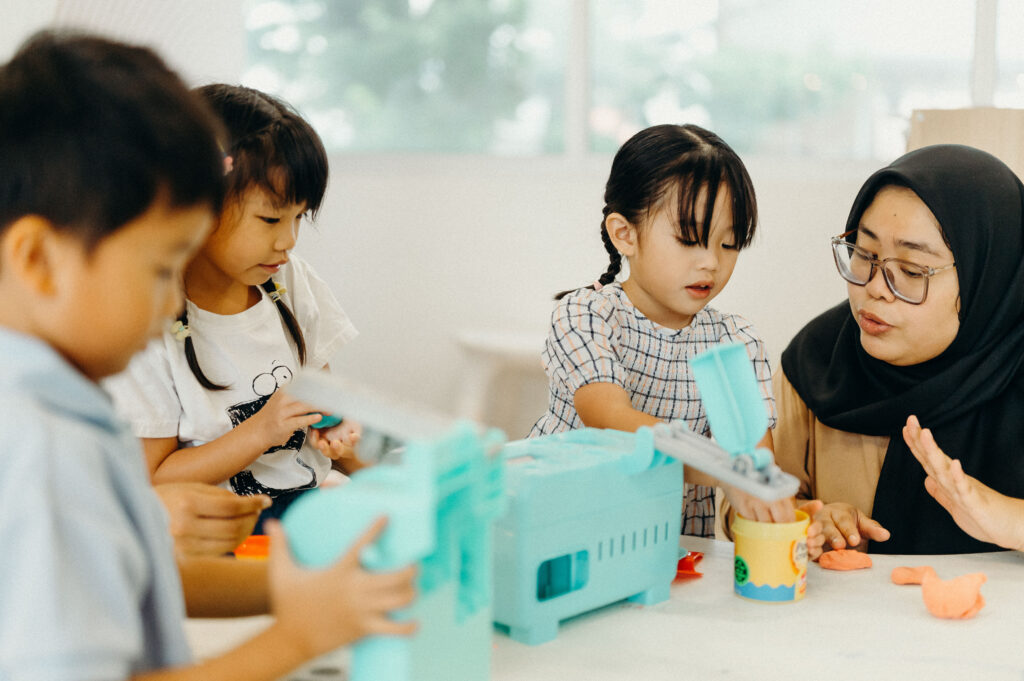
School readiness is not just about what a child knows. It is also about whether they can take part in learning with growing independence.
A child may know their letters, numbers or schoolwork and still struggle to follow a group instruction, get started without repeated prompting, stay with a task, move through classroom routines or keep going when work becomes difficult.
These are often called learning-to-learn skills. They help children access the teaching that is already happening around them.
What does school readiness really mean?
Classrooms ask children to manage many things at once. They need to notice what the teacher is saying, remember what to do, begin a task, work when adult attention is shared, move between activities and complete familiar routines with less help over time.
For some children, the academic content is not the main difficulty. The harder part is managing everything around the learning.
Why can school still feel hard when my child can learn?
Parents often describe a gap between what their child can do and what they can do independently in a classroom.
These patterns do not necessarily mean a child cannot learn. They may point to skills around attention, routines, persistence or independence that need more direct teaching and practice.
Which learning-to-learn skills matter most?
We look most closely at four areas that affect whether a child can access classroom learning with growing independence.
Why can my child do it 1:1 but struggle in class?
A classroom is more demanding than a one-to-one setting. Instructions may be given once to a whole group. The teacher’s attention is shared. There are more distractions, more transitions and fewer opportunities for an adult to prompt each step.
That means a child who appears capable in a quiet 1:1 setting may still need support to use those same skills when the environment becomes more complex.
What does “focus” actually look like?
We do not define good attention as sitting perfectly still or maintaining eye contact for long periods. The more useful question is whether your child can access the activity.
A child can move, fidget or look away at times and still be engaged. Our aim is not compliance for its own sake. We focus on whether the child can participate, learn and become more independent.
How can Behaviour Support help with school readiness?
At Tesserae, we describe what we do as Behaviour Support. Our work is grounded in behavioural science and Applied Behaviour Analysis (ABA).
We look at what may be getting in the way, teach the relevant skill in manageable steps, create repeated opportunities to practise, and track whether the child is becoming more independent over time.
How do skills move from therapy into the classroom?
By helping children use the same skill with different people, activities and settings. The goal is not for a child to become good at therapy. It is for the skill to become useful in everyday school life.
Social Skills & Communication.
What do parents usually ask us?
Is school readiness only for preschool children?
No. The same learning-to-learn skills remain important as classroom demands increase. Older children may also need support with independent work, following group instructions, task persistence, routines and completing work with less adult prompting.
Does difficulty focusing mean my child has ADHD?
No. Attention can be affected by the task, environment, language demands, motivation and other factors. Difficulty focusing on its own does not tell us why it is happening. If a formal diagnostic assessment would be useful, we will let you know.
My child can focus for hours on things they enjoy. Can they still struggle at school?
Yes. Attention changes with interest, difficulty and the demands of the setting. A child may stay with a preferred activity for a long time and still find it difficult to notice group instructions, begin less-preferred work, return after distraction or sustain effort in class.
Is Behaviour Support the same as Educational Therapy or tuition?
No. Educational Therapy and tuition focus more directly on academic learning and remediation. Behaviour Support focuses on the learning behaviours that affect whether a child can access teaching, such as attention, task initiation, persistence, following instructions and independence. Some children benefit from both.
Does my child need a diagnosis before starting?
No. We support children based on their functional needs. A diagnosis can provide useful context, but it is not required for working on classroom participation, focus, independence or other learning-to-learn skills.
Can you work with my child's school?
Yes, where it is helpful and with the school’s approval. This may involve a school observation, consultation with teachers or direct In-School Behaviour Support when the classroom context is important to understanding or practising the skill.
This page provides general information and does not provide a diagnosis. Where a medical, psychological, occupational therapy or learning assessment is appropriate, we will recommend that families speak with the relevant professional.
On this page
Not sure what is getting in the way?