
As a parent in Singapore, you are naturally attuned to your child’s development. In a fast-paced environment where milestones and school readiness are closely monitored, noticing that your child maybe developing differently can trigger a wave of quiet anxiety.
Perhaps you have watched your child struggle to sit still during a family dinner at a busy restaurant. Maybe you have noticed them having intense meltdowns when a weekend routine changes, or seen them struggle to connect with peers at the HDB playground. When these moments happen repeatedly, it is incredibly common to start searching for answers.
During this early research phase, you might find yourself caught in overlapping terminology. You might wonder if your child’s difficulty following multi-step instructions is an attention issue, or if their intense reaction to the noisy school canteen is a sensory processing difference. This leads to one of the most common diagnostic crossroads: understanding the nuances of ADHD vs autism.
If you are feeling confused, validate that worry. The lines between neurodivergent profiles often blur in early childhood. This guide is designed to help you untangle those overlapping behaviors, providing you with a clear, objective framework to understand your child’s unique brain before you even step into a clinic.
The Core Differences: Defining the Baselines
To understand how these two developmental profiles overlap, we first need to look at them separately. While they share many external behaviors, the root cause driving the behavior is often entirely different.
Understanding Autism
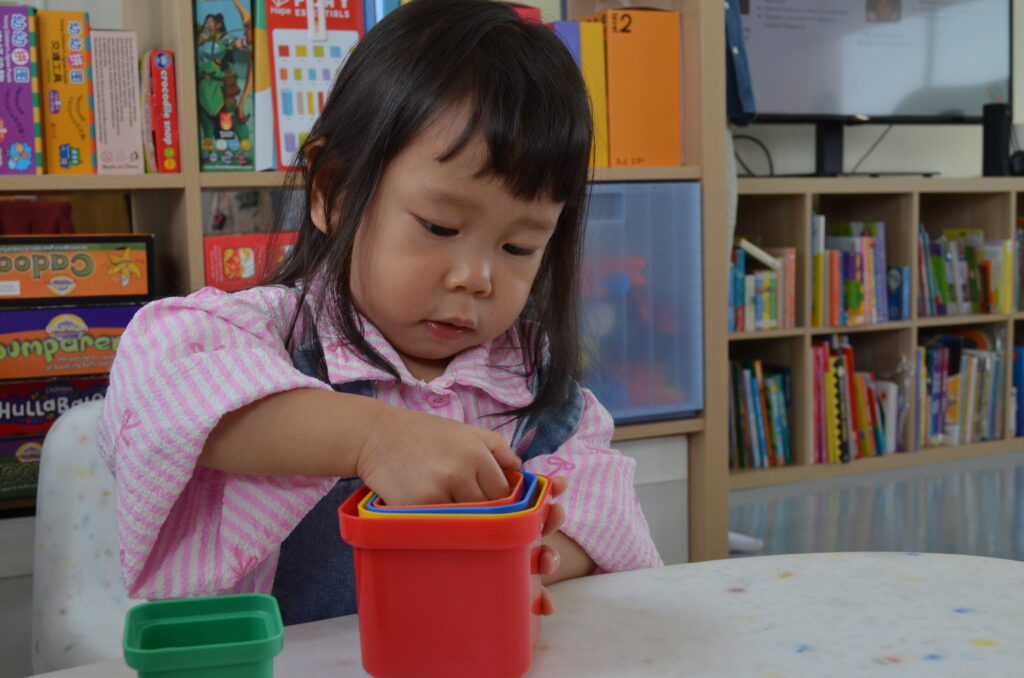
Autism is a neurodevelopmental difference that primarily affects how a person communicates, interacts socially, and experiences the sensory world.
Children with autism often experience the world more intensely than their peers and look for ways to create predictability and comfort.The core hallmarks include:
- Social Communication Differences: Autistic children often struggle to intuitively grasp the “hidden curriculum” of social rules. They might find it difficult to read neurotypical body language, maintain expected eye contact, or engage in the back-and-forth rhythm of a conversation.
- Routine and Predictability: A strong reliance on routine is a source of safety. A sudden change – like taking a different MRT route home or a substitute teacher appearing in class – can cause profound distress.
- Deep, Focused Interests: Autistic children often develop intense, highly specific passions (sometimes called “special interests”). This could be anything from the mechanics of local train systems to a specific species of insect.
- Repetitive Behaviors: You might notice behaviors like hand-flapping, rocking, or repeating certain phrases (echolalia). These repetitive movements or sounds, often called stimming, help your child self-regulate when they feel excited, anxious, or overwhelmed.
Understanding ADHD
Attention-Deficit/Hyperactivity Disorder (ADHD) is also a neurodevelopmental difference, but it is primarily centered around executive functioning, impulse control, and the regulation of attention.
A common misconception is that children with ADHD cannot pay attention. In reality, it is an issue of regulating attention. Children with ADHD can focus, but struggle to control where and how long their attention stays, especially on tasks that aren’t immediately interesting or stimulating. The core hallmarks include:
- Executive Dysfunction: This involves struggles with working memory, organizing tasks, and initiating activities. A child might genuinely want to pack their school bag but feel completely paralyzed by the multi-step nature of the task.
- Impulsivity: Children with ADHD often act before they think. They might blurt out answers in class, interrupt conversations, or grab a toy without asking, driven by an immediate impulse rather than a lack of social understanding.
- Hyperactivity: This is the classic “motor constantly running” presentation. It looks like fidgeting, an inability to stay seated during mealtimes, or a constant need to climb and move.
- Need for Novelty: Children with ADHD often seek new, exciting activities because their brain needs higher stimulation to stay engaged.
The Overlap: Why They Look So Similar
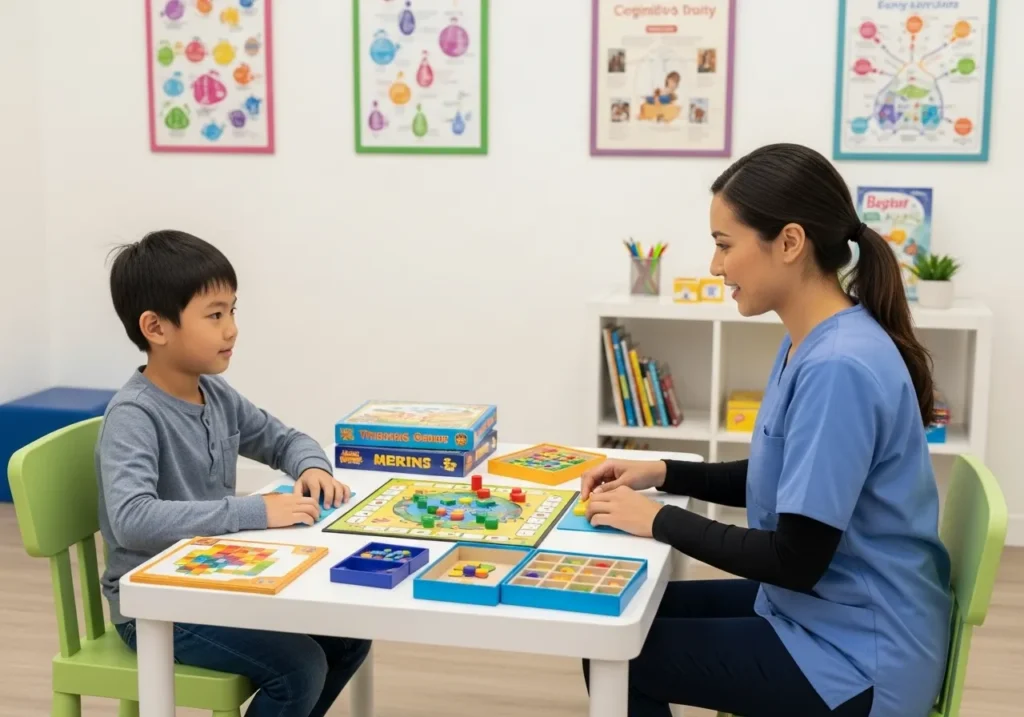
If the core drivers are so different, why is it so difficult to tell them apart? The reality is that the external behaviors – what you see on the surface – can look nearly identical. This ‘messy middle’ shows why professional assessment is important, even if careful home observations give you helpful clues.
Here is a breakdown of the overlapping behaviors and how to distinguish the underlying cause:
The Sensory Meltdown vs. The Frustration Outburst
Both autistic children and children with ADHD are prone to intense emotional outbursts, but the triggers usually differ.
- The Autistic Meltdown: This is usually triggered by sensory overload or sudden changes in routine, causing an involuntary emotional response. If the school canteen is too loud, too bright, and entirely unpredictable, the autistic child’s nervous system becomes overwhelmed.
- The ADHD Outburst: This is often driven by frustration, task-switching, or impulsivity. If an ADHD child is forced to stop a highly stimulating video game to do boring homework, their brain struggles with the abrupt drop in dopamine. The resulting outburst is rooted in emotional dysregulation and the physical discomfort of forced under-stimulation.
Hyperfocus vs. Special Interests
Both profiles involve periods of intense, unbreakable concentration, but they manifest differently.
- Autistic Special Interest: This is a long-term passion that provides comfort and joy, often returning consistently over months or years.
- ADHD Hyperfocus: This is often situational and fleeting. A child with ADHD might hyperfocus on a brand new hobby – like building a complex Lego set or mastering a new video game – ignoring hunger and sleep to do so. However, this short-term, intense focus on something exciting or novel, may fade once the interest wears off.
Social Struggles
Both children might struggle to make or keep friends, but for vastly different reasons.
- The Autistic Social Struggle: The child may want friends but find social rules confusing or difficult to interpret, leading to awkward or unintended behaviors. They might stand too close, fail to recognize when a peer is annoyed, or prefer to talk exclusively about their own interests. They miss the social cues.
- The ADHD Social Struggle: The child often knows the social rules but may act impulsively.. They know they should wait their turn on the playground slide, but their body moves before their brain can apply the brake. They see the social cues, but they move too fast to process them in time.
At Tesserae, our Clinical Director, Dr Dominic Leong, specialises in identifying the differences between autism and ADHD and translating them into clear, practical next steps. Our goal is always to support each child towards independence, not long-term reliance.
AuDHD: When Both Are Present
To make matters even more complex, these are not mutually exclusive conditions. In fact, it is incredibly common for a child to have autism and ADHD together. In neurodivergent communities and clinical spaces, This dual presentation is sometimes called ‘AuDHD’ in communities, though it’s not a formal medical term.
- The Need for Routine vs. The Need for Novelty: The autistic profile craves deep predictability, safety, and sameness. The ADHD profile, however, thrives on novelty, dopamine, and spontaneity. This can result in a child who demands to follow the exact same routine every day but is simultaneously under-stimulated and frustrated by it.
- Masked Hyperactivity: An autistic child’s need to follow classroom rules and avoid drawing attention to themselves might suppress their ADHD hyperactivity. They might sit perfectly still in class (masking their ADHD) but completely exhaust their executive function doing so, leading to a massive meltdown the second they step through the front door at home.
- Social Paradoxes: A child with both profiles might impulsively seek out highly stimulating social environments (ADHD) but quickly become completely overwhelmed by the sensory input and unpredictable social demands of that exact environment (Autism).
Understanding that autism and ADHD together can create a paradoxical, highly complex profile is often a massive “lightbulb” moment for parents who feel their child does not fit neatly into one single diagnostic box.

What to Observe at Home and in School
Before you seek a formal medical opinion, gathering clear, contextual data is the most helpful thing you can do. Pediatricians and psychologists rely heavily on parent and teacher reports.
Observe the Transitions
- How does your child react when moving from a preferred activity to a non-preferred activity?
- Is the distress caused by the change in routine (Autism indicator) or the boredom of the new task (ADHD indicator)?
Observe the Social Environment
- Watch them at the playground or during recess. Do they approach other children?
- If a peer says, “I don’t want to play that anymore,” does your child fail to understand why the peer is leaving (Autism indicator), or do they get impulsive and forcefully try to keep the peer engaged (ADHD indicator)?
Observe the Focus
- When are they able to pay attention?
- Can they only focus when the topic is their one specific, long-term passion (Autism indicator)? Or can they focus intensely on anything that happens to be brand new, loud, or exciting in that exact moment (ADHD indicator)?
Observe the Executive Functioning
- When you give a three-step instruction (“Put your shoes on, grab your water bottle, and wait by the door”), what happens?
- Do they get distracted by a toy after step one (ADHD indicator)? Or do they freeze because the phrasing of the instruction deviated from the exact way you normally say it (Autism indicator)?
Keep a simple diary on your phone. Note the environment, the trigger, the behavior, and how the child eventually regulated themselves. This documentation will be invaluable to a clinician.
The Diagnostic Pathway in Singapore

If your observations lead you to believe your child needs more support – whether for ADHD, autism, or both – knowing the next steps in the local context can alleviate a lot of stress. In Singapore, you generally have two main pathways for a formal assessment:
The Public Health Route
For most Singaporeans and Permanent Residents, the journey begins at a neighborhood Polyclinic. You will share your observations with the attending doctor, who can then issue a referral to a Child Development Unit (CDU) at either KK Women’s and Children’s Hospital (KKH) or National University Hospital (NUH), where a multidisciplinary team of pediatricians, psychologists, and therapists conducts assessments.
- The Benefit: This route is heavily subsidized and integrates seamlessly into the Ministry of Education (MOE) framework, opening doors for SG Enable funding and Early Intervention Programme for Infants & Children (EIPIC) placements.
- The Consideration: Because the public system is in high demand, wait times for an initial assessment can range from several months to over a year.
The Private Route
Alternatively, you can bypass the polyclinic and directly consult a private developmental pediatrician or an educational/clinical psychologist who specializes in pediatric neurodiversity.
- The Benefit: The private route is significantly faster, allowing you to get a baseline assessment and begin targeted support or therapy in a matter of weeks. The assessments are often highly detailed and individualized.
- The Consideration: This route requires out-of-pocket funding. However, formal diagnostic reports from registered private clinicians are entirely valid for applying to MOE Special Educational Needs (SEN) support and SPED schools.
Regardless of the route you choose, approach the assessment not as a test your child needs to pass or fail, but as a fact-finding mission.
Want to understand how Tesserae can help your child?
Screening vs Diagnosis
As you begin to make sense of your child’s behaviours, one of the most common questions parents ask is:
“Do I need an ADHD or autism diagnosis right away, or is there a first step?”
In Singapore, the process of identifying neurodevelopmental differences like ADHD or autism typically involves two stages: screening and diagnosis. While they are often confused, they serve very different purposes.
Understanding this difference can help you take the next step with more clarity, and less stress.
What is ADHD or Autism Screening?
Screening is a first-level developmental assessment used to identify whether your child may show signs of ADHD, autism, or related developmental differences.
It is not a formal diagnosis. Instead, it helps answer if these behaviours and signs observed are worth exploring.
A developmental screening in Singapore typically includes:
- Behavioural observations
- Parent interviews and developmental history
- Standardised checklists or questionnaires
- Initial professional impressions and recommendations
Many parents searching for terms like “ADHD test Singapore”, “autism screening Singapore”, or “child behaviour assessment” are often looking for this step.
Screening is often:
- Faster (can be done in a single session)
- More accessible than a full diagnostic assessment
- Actionable, with practical strategies you can start using immediately
It is especially helpful if you are still in the early stage of noticing patterns but are unsure what they mean.
What is a Formal ADHD or Autism Diagnosis?
A diagnosis is a comprehensive clinical assessment conducted by a qualified professional such as a paediatrician, psychiatrist, or clinical psychologist.
It answers a more definitive question if your child meets the clinical criteria for ADHD or autism?
A formal diagnosis in Singapore usually involves:
- Detailed clinical and developmental interviews
- Input from parents, teachers, and caregivers
- Standardised diagnostic tools (e.g. structured autism or ADHD assessments)
- Observations across social, behavioural, and cognitive domains
- Access to government-funded programmes (e.g. EIPIC)
- School-based support (MOE SEN accommodations or SPED pathways)
- Official documentation for long-term planning
However, this process can take several months in the public system, or involve higher costs in private clinics.
Why Many Parents Start with Screening First
For many families, screening is a practical, lower-pressure first step before committing to a full diagnosis.
Starting with screening allows you to:
- Get professional clarity on your child’s behaviour
- Understand whether traits align more with ADHD, autism, or other profiles
- Receive early strategies without waiting months
- Make a more informed decision about diagnosis
In some cases, screening alone provides enough guidance to begin support.
In others, it becomes a valuable stepping stone toward a formal diagnosis, with clearer observations and stronger documentation.
Conclusion
Understanding the difference between ADHD and autism is a complex journey, but you are already taking the most important step by simply observing and seeking to understand your child’s world.
Whether your child is struggling with the impulsive engine of ADHD, the sensory and social complexities of autism, or the unique paradox of AuDHD, remember that a diagnosis is not a negative label. It is simply a roadmap. It gives you, the teachers, and the therapists the vocabulary needed to build the right scaffolding.
When you understand how your child’s brain works, you stop trying to force them into a mold that doesn’t fit, and you start building an environment where they can genuinely thrive. Take your time, lean on your community, and trust your intuition. You are doing a wonderful job.
Disclaimer: This article is for informational purposes only and does not constitute medical advice. Please consult with qualified healthcare professionals for personalised diagnosis and treatment recommendations for your child.