Choosing an early intervention programme is not just about finding a place for your child to attend. It is about deciding how your child will be taught to learn, how their challenges will be understood, and how their progress will be supported over time.
At Tesserae, our Early Intervention Programme (EIP) is ABA-led, clinically designed, and outcomes-focused. It is built for children who need more than exposure, routines, or general stimulation. It is for children who need intentional teaching, structured support, and a team that understands how development actually changes through learning.
Our goal is not to “keep children busy.”
Our goal is to build skills that last.
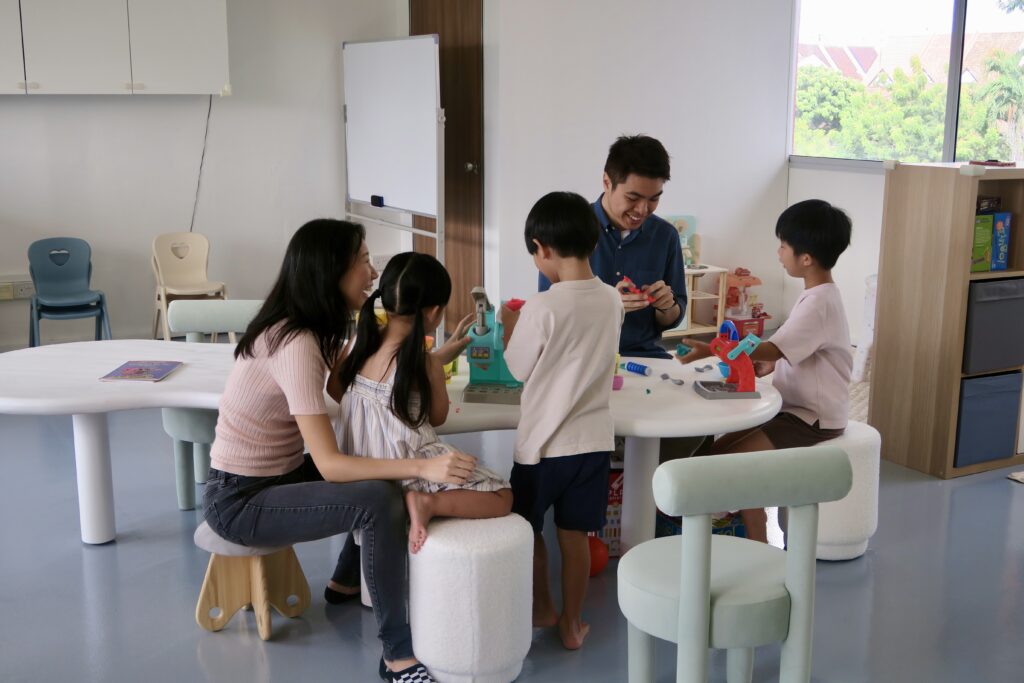
Our EIP supports young children between the ages of 2-9 who may:
Be developing at a different pace from their peers
Have been identified with Global Developmental Delay (GDD), Autism Spectrum Disorder (ASD), Attention Deficit Hyperactivity Disorder (ADHD), or are under developmental monitoring
Experience challenges with communication, attention, learning readiness, transitions, or emotional regulation
Struggle to participate meaningfully in typical preschool environments despite exposure and time
Many families come to us after hearing phrases like “let’s wait and see” or “every child develops differently,” while still feeling that something is not quite right. Others have already tried group programmes but feel their child is not truly learning, just attending.
Communication is treated as a functional life skill, not just vocabulary building.
These skills form the basis for later classroom success.
Communication is treated as a functional life skill, not just vocabulary building.
Social learning is scaffolded to match each child’s developmental level.
The aim is not compliance for its own sake, but regulation that supports learning and participation.
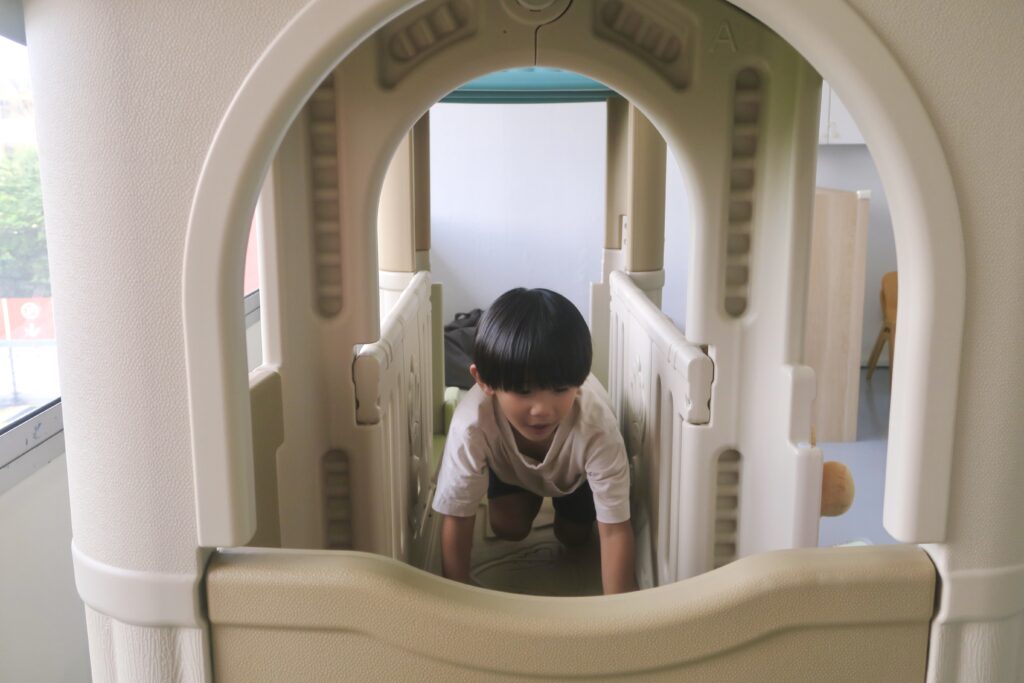
Our Early Intervention Programme is conducted on-site at our centre and offers both half-day (3 hours) and full-day (6 hours) options. Programme frequency ranges from two, three, or five times per week, with children placed in small groups based on close matching of developmental age and needs.
Children benefit from small group sizes, consistent staffing and routines, predictable schedules, and close clinical oversight.
Frequency and intensity are discussed collaboratively, and based on a child’s learning profile, their readiness for group participation, and a family’s goals and capacity.
Early intervention works best when it is structured, individualised, and intentional. Applied Behaviour Analysis (ABA) provides a scientific, evidence-based framework for understanding:
In many EIP settings, ABA is mentioned but not truly integrated. At Tesserae, ABA is the backbone of our programme design, not an add-on. This means:
ABA allows us to answer critical questions that matter to families:
Finding the right EIP provider can feel overwhelming, especially when you’re already managing your child’s various needs. However, knowing what to look for can help you make confident choices about your child’s EIP team.
Our EIP is designed and overseen by Board Certified Behavior Analysts. This ensures that programme decisions are grounded in clinical reasoning, not convenience or tradition.
Activities are selected because they teach something specific, not because they fill time.
Group settings are valuable, but children do not learn simply by being in a group. Each child in our Early Intervention Programme has:
This allows children to benefit from social exposure without being lost in the group.
Many programmes assume children will naturally pick up skills like sitting, waiting, sharing, or following instructions. For children who need early intervention, these skills often need to be explicitly taught.
We directly teach:
These are foundational skills for success in preschool and beyond.
We do not rely on impressions alone. Skill acquisition and behaviour patterns are monitored so we can:
This prevents children from “coasting” in programmes without meaningful gains.
Early intervention should prepare children for their natural environments, not create long-term dependence on intensive support. Our EIP is intentionally designed to fade prompts, structure, and support over time, as children build the skills they need to function more independently.
Support is gradually adjusted so that children can:
The goal is not to keep children in intervention, but to help them transition successfully into their natural learning and social environments with the right foundations in place.
At Tesserae, our Clinical Director, Dr Dominic Leong, is Southeast Asia’s only practicing Doctoral-level Board Certified Behavior Analyst-Doctoral (BCBA-D), the most advanced international qualification in ABA.
The early years are a period of rapid brain development. Skills learned early often require less effort and generalise more naturally over time.
Early intervention is not about labels or endpoints. It is about early access to support that helps build a strong foundation for what comes next.
Having sufficient time is important so that we can thoughtfully support children in preparing for:

Most families begin their journey at Tesserae with a developmental assessment, which allows us to:
From there, families can move forward with confidence rather than uncertainty.
Want to find out if our Early Intervention Programme is suitable for your child?
Disclaimer: This information is for educational purposes only and should not replace professional medical advice. Always consult with qualified healthcare professionals about your child’s specific needs and treatment options.
Book a free discovery call with us